
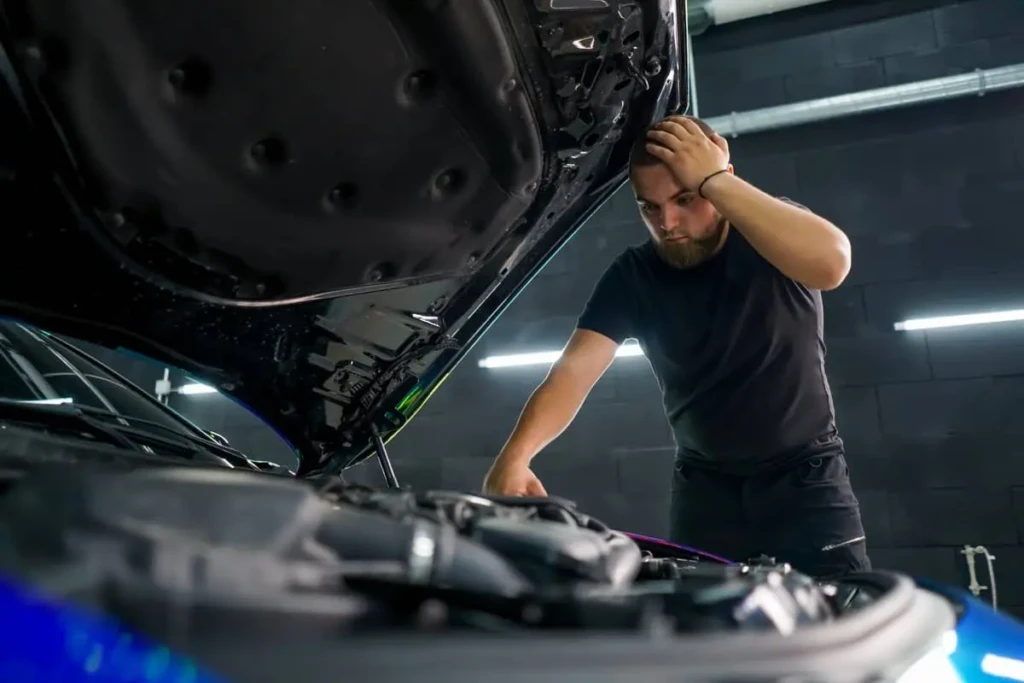
If you are counting California lemon law repair visits, chances are the real problem is no longer just the vehicle. It is the uncertainty that comes with hearing the same promises after the same unresolved issue.
You take the car in once, maybe twice, and tell yourself the next appointment will finally solve it. Then the warning light comes back. The hesitation returns. The same explanation from the service desk starts to sound rehearsed. At some point, frustration gives way to a more serious question: How many repair visits are too many before the problem stops being inconvenient and starts becoming legal?
That is where California lemon law begins to matter.
There is no neat, universal number that applies to every case. The law does not work like a punch card where the fourth visit automatically triggers a refund. What matters is whether the manufacturer has had a fair opportunity to repair a serious warranty-covered defect and still failed to correct it. That is often the point when speaking with a lemon law attorney California consumers contact becomes a practical next step.
Why California Lemon Law Repair Visits Matter More Than the Count
People naturally look for certainty in numbers. Two visits feels early. Three starts to feel suspicious. Four sounds unreasonable. But California lemon law is usually less interested in the count alone than in what those visits reveal.
A repair history starts to matter when it shows a pattern: the same issue resurfacing, the same system failing again, the same promises leading nowhere. A car that goes in repeatedly for related complaints is telling a very different story than a vehicle that had one isolated repair and moved on.
That is why the better question is not simply, “How many visits have there been?” It is, “What changed after those visits?”
If the answer is “not much,” the record itself may be pointing to a much larger problem.
When Repeat Repairs Start Raising Red Flags

A weak case often looks random. A stronger one usually looks familiar.
You bring the car in for one issue. It comes back. Then it returns under a slightly different description. Then another visit follows, but the underlying symptom never really disappears. That is when a repair log stops looking like routine ownership and starts reading like evidence.
The warning signs often include:
- the same complaint returning after repair
- repeated visits for the same or closely related issue
- long stretches where the vehicle is out of service
- repairs that appear to fix the symptom but not the problem
- a car that remains unreliable despite multiple service attempts
This is also why our blog Is Your Car a Lemon in California? The Signs Most Drivers Miss is a useful companion piece. In many cases, the legal issue begins long before the owner realizes the pattern is serious.
Reasonable Repair Attempts Under California Lemon Law
Manufacturers are entitled to try to fix a problem. That much is fair. But a “reasonable opportunity” does not mean a consumer is expected to keep returning forever while the same defect keeps circling back.
At some point, repeated attempts stop looking diligent and start looking ineffective.
That point can arrive faster when the issue affects safety. It can also arrive when the vehicle spends an unreasonable amount of time in the shop, even if the service records use slightly different language each time. A case is not built only on the number of visits. It is built on the failure of those visits to resolve the problem.
That is often why a lemon lawyer California consumers contact will look closely not just at the repair count, but at the sequence: what happened, when it happened, what was done, and whether the same issue returned afterward.
Why the Full Repair Record Matters
A single repair appointment rarely proves much on its own. What matters is the trail.
A strong repair history shows how the problem evolved, how often the manufacturer had a chance to address it, and how little progress those efforts produced. Sometimes the most important evidence is not dramatic at all. It is buried in dates, mileage, repeated complaints, and invoice language that keeps changing while the core problem stays the same.
That is why documentation matters so much. The more clearly the pattern can be seen, the harder it is to dismiss.
Useful records include:
- repair orders
- service invoices
- warranty documents
- mileage logs
- notes on recurring symptoms
- communication with the dealership or manufacturer
If you are not sure what to save or how much detail matters, the California lemon law requirements FAQ is a good place to begin.
The Hidden Cost of Just One More Visit
A lot of people wait longer than they should, not because they do not care, but because they want to be reasonable.
They do not want to overreact. They do not want to assume the worst. They want to believe the next appointment will solve it. But waiting has a cost. The records become harder to organize. The symptoms blur together. The disruption starts feeling normal. Before long, the owner has adjusted life around a vehicle that should have worked properly in the first place.
That shift matters.
When a person begins budgeting extra time for breakdowns, avoiding longer drives, or losing confidence in the vehicle altogether, the defect is no longer a minor inconvenience. It is affecting daily life, and that is exactly the kind of impact California lemon law is designed to address.
A lemon law firm California consumers contact will usually want to see not just what was repaired, but what the recurring problem has cost in time, use, and peace of mind.
So, How Many Repair Visits Are Too Many?
The most honest answer is this: enough to show that the manufacturer had a fair chance to fix the problem and still did not fix it.
Sometimes that becomes obvious quickly. Sometimes it takes longer. But once the same issue continues through multiple visits, once the repair history starts reading like a loop, or once the car has spent too much time out of service, it becomes much harder to argue that the problem is still routine.
If you are already wondering whether the number of visits has become excessive, you may be closer to that threshold than you think.
The Bottom Line
California lemon law does not revolve around a single magic number. It revolves around failure. Specifically, the failure to repair a serious warranty-covered defect after being given a reasonable chance to do so.
If your vehicle keeps going back for the same issue, if the repair history is starting to repeat itself, or if the car has spent too much time in the shop without a real solution, the pattern may matter more than the count.
You can start with our California Lemon Law page, review the broader Lemon Law overview, or visit the California lemon law requirements FAQ for more detail.
And if the same defect keeps returning after repeated attempts to fix it, that may be the clearest sign that it is time to have the case reviewed by a lemon law attorney California.